
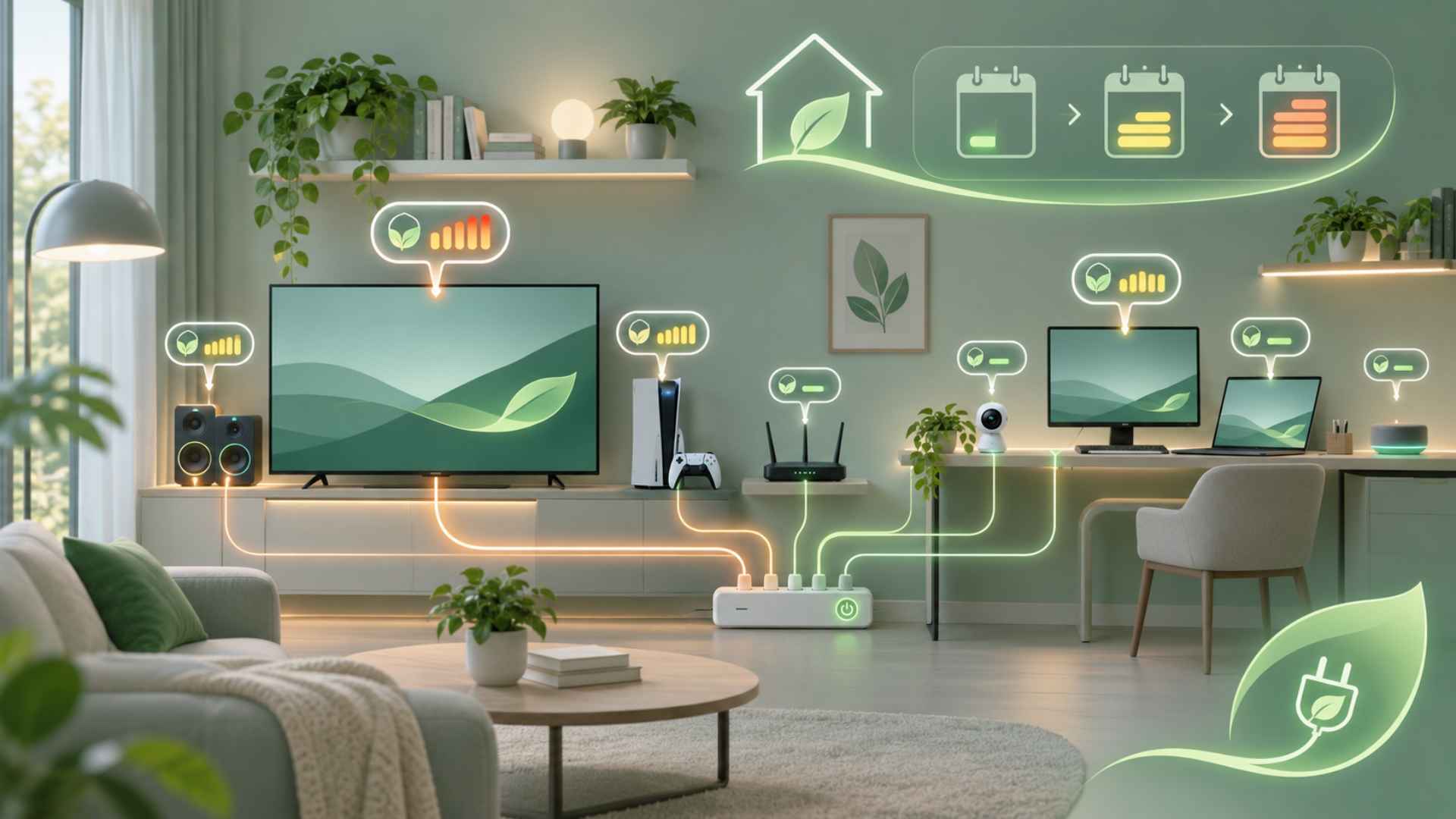
Home electronics account for a regular share of household electricity use, from televisions and computer monitors to wireless routers, speakers, and game consoles. Each device has a different power requirement, and its contribution to the electricity bill depends on both operating wattage and daily use. A small device that remains active around the clock can consume more electricity over a year than a larger device used only occasionally. For households with several connected products, these differences make energy efficiency a practical consideration rather than simply a feature listed on a product label.
The design of modern electronics has also changed the relationship between performance and power consumption. Efficient processors, improved power supplies, and automatic low power modes help many products complete routine tasks with less electricity than earlier designs. Nevertheless, actual results vary by model, screen size, settings, and user habits. A television with an efficient display can still consume considerable energy if its brightness remains at maximum for long periods. Accurate comparisons therefore require attention to both technical specifications and the conditions in which equipment operates.
Electricity Consumption Across Common Household Devices
Electrical power is measured in watts, while electricity bills generally record energy use in kilowatt hours, abbreviated as kWh. One kilowatt hour equals the energy consumed by a 1,000 watt appliance over one hour. For example, a television that draws 100 watts for four hours each day uses approximately 146 kWh in one year. This is an illustrative calculation, not a fixed figure for all televisions. A network router that draws 10 watts continuously would use about 87.6 kWh annually, despite having a much lower power rating. Duration matters as much as wattage.
Televisions, monitors, and computers illustrate the impact of device design on electricity demand. Larger screens generally require more power than smaller screens of similar technology, while brightness levels and picture modes can affect consumption during use. LED backlit liquid crystal displays control light through an illuminated panel, whereas OLED screens produce light at individual pixels. Neither display type has a universal energy advantage under every image and brightness condition. Computer demand also changes with activity: basic document work generally requires less processing power than intensive graphics or modern video games. A product’s maximum rated wattage is not necessarily its average use.
Standby Power and Efficiency Standards
Some electronics draw electricity even when they appear to be off. Remote control receivers, network connections, internal clocks, and automatic update functions can remain active in standby mode. One watt of continuous consumption adds up to 8.76 kWh over a full year; five watts amounts to 43.8 kWh. These figures are small compared with the use of major household appliances, but several devices can produce a noticeable combined load. Network equipment, security systems, and other products that provide continuous services require separate consideration because their normal functions may depend on uninterrupted power.
Efficiency standards provide a more consistent basis for product comparisons. Under the ENERGY STAR television specification, qualifying models must meet limits for electricity use in active and standby modes. Its passive standby limit is 0.5 watts, while the applicable network active standby limit is 1 watt. Computer criteria also address low power operation, power supply efficiency, and automatic sleep settings. Certification is based on defined test methods rather than a promise that every household will obtain identical savings. Standards and labels vary across countries, so energy figures should be compared under equivalent test conditions whenever possible.
Practical Methods to Reduce Home Electronics Electricity Use
Households can begin with a basic inventory of electronics and their operating schedules. A plug in electricity meter can measure the actual consumption of compatible appliances over several hours or days, including low power modes when the meter is sufficiently sensitive. Multiplying a measured average wattage by hours of use, then dividing by 1,000, produces a kilowatt hour estimate. That figure can be multiplied by the local electricity tariff to estimate cost. This method is more useful than relying solely on the wattage printed on a power adapter, which often states a maximum output rather than normal electricity consumption.
Device settings offer another practical opportunity. Automatic sleep modes prevent computers and monitors from remaining fully active during long periods of inactivity. On televisions, moderate picture brightness and automatic brightness control can reduce unnecessary power demand, depending on the model and room conditions. Game consoles may offer rest modes with different network features and electricity requirements. Users can review these options according to their needs, particularly where overnight downloads or remote access are involved. A decorative screen saver is not a substitute for display sleep, since the screen may continue to consume substantial power while the animation runs.
Electricity savings should also be balanced with reliability and product life. Power strips can disconnect entertainment accessories that do not need continuous electricity, but they are unsuitable for equipment that must remain online or maintain a vital function. Clear ventilation openings help electronic components operate within their intended temperature range, while correct power adapters reduce the risk of electrical faults. Replacing a functional device solely for a small efficiency improvement may also create unnecessary electronic waste. A sensible approach combines measured consumption, suitable power settings, careful maintenance, and replacement decisions based on the condition and actual use of each product.